PLENARY SPEAKERS
Get to know more about the speakers of the Physics Days 2025 Conference
|
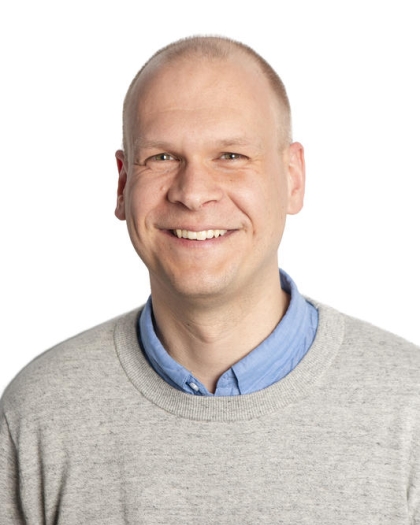
JOONAS NÄTTILÄ Talk title: Extreme Physics of Neutron Stars |
Associate Professor Joonas Nättilä is a theoretical astrophysicist specializing in the study of cosmic plasmas surrounding neutron stars and black holes. His research focuses on some of the most energetic, extreme, and explosive phenomena in the universe and involves both theoretical “pen-and-paper” work and large-scale supercomputer simulations to understand the dynamics of astrophysical plasmas. He is the Principal Investigator of the European Research Council (ERC)-funded 2.2MEUR research project ILLUMINATOR. The project aims to unravel how neutron stars generate their observed electromagnetic radiation. Nättilä currently serves as an Associate Professor of Astrophysics at the University of Helsinki. Prior to this, he was an Associate Research Scientist at Columbia University in New York and a Flatiron Research Fellow at the Center for Computational Astrophysics at the Flatiron Institute. |
|
|
KARL LAUNDAL Talk title: From Dancing Lights to Power Outages: How Space Weather
|
Karl Laundal is a research professor at the University of Bergen in Norway, specializing in space physics. His PhD work in 2010 used global auroral images to investigate dynamics in Earth's magnetosphere and led to the discovery that auroras in the northern and southern hemispheres can be entirely different, a result published in Nature. In 2013, he joined the Birkeland Centre for Space Science, a Norwegian Centre of Excellence, where he led a group focused on the dynamics of the asymmetric geospace. His research has also been supported by grants from the Trond Mohn Research Foundation, the Reseach Council of Norway, ESA, and the ERC. He is a co-investigator on NASA's EZIE mission, which will remotely measure Earth's magnetic field using the Zeeman effect. Laundal leads the development of algorithms to interpret these measurements, working closely with colleagues in Finland. EZIE is scheduled to launch just days before the Physics Days. He has authored over 70 peer-reviewed publications on topics related to space physics and magnetosphere-ionosphere dynamics. | |
|
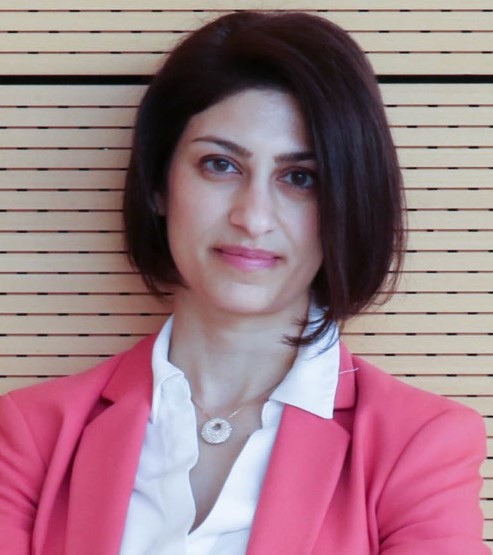
MARTHA CONSTANTINOU Talk title: Unlocking the Secrets of the Proton's Spin with Numerical Simulations of Quantum Chromodynamics
|
|
Dr. Constantinou is an Associate Professor of Physics and a Physics Department Vice Chair at Temple University in Philadelphia, USA. She holds a doctoral degree from the University of Cyprus (2008), and her professional preparation includes postdoctoral positions awarded by the Cyprus Research Innovation Foundation. She was also a research associate at the Computation-based Science and Technology Research Center at The Cyprus Institute. She is a recipient of a 2019 Early Career Award from the U.S. Department of Energy Office of Science (Nuclear Theory). She received the Selma Lee Bloch Brown Professorship at Temple, which recognizes female faculty in research and service. She has been elected and currently serving on the Steering Committee of the EIC Users Group, the Diversity-Inclusion Committee of the Lattice Field Theory Community, and the Executive Committee of the USQCD Consortium. She has also been appointed the Chair of the External Advisory Board of the EIC Theory Institute at Brookhaven National Lab. She is the Lead PI and a spokesperson of the Quark-Gluon Tomography Topical Collaboration funded by the US Department of Energy, and she is a member of the Physics Cluster of the Committee on Science and the Arts of the Franklin Institute of Philadelphia. The committee identifies worldwide scientific and technological achievements and recommends awarding the prestigious Benjamin Franklin Medal to the most pioneering scientists, engineers, inventors, and innovators from across the globe. Dr. Constantinou's primary research interest is the study of hadron structure using the formulation of lattice QCD, including the decomposition of the proton spin, nucleon form factors, parton distribution functions, and gluonic contributions to nucleon quantities. She also has long-standing expertise in lattice perturbation theory and renormalization. Dr. Constantinou is also interested in promoting synergy between lattice QCD and theory to improve the constraints on quantities that are not easy to isolate experimentally or provide input to assist in analyzing experimental data sets. |
|
FRANK de GROOT Talk title: Resonant inelastic X-ray scattering of transition metal oxides
|
My research focuses on the theoretical and experimental aspects of X-ray spectroscopy. The CTM4XAS program has been written for the simulation of X-ray spectroscopy and an overview of X-ray spectroscopy is described in the book Core Level Spectroscopy of Solids. Currently, the research focuses mainly on resonant inelastic X-ray scattering (RIXS), which e.g. makes magnetic transitions visible. The application of X-ray spectroscopy focuses on the study of the electronic and magnetic structure of condensed matter, in particular the investigation of transition metal oxides, for example thin oxide layers under working (photo) (electro) catalytic conditions | |
|
PEKKA MANNINEN CSC, Director, Science and Technology Docent Pekka Manninen is responsible for the customer interface, user support and development of CSC's scientific computing services. Associated parallel session theme: Public lecture Talk title: Supertietokoneet, tekoäly ja sellaiset
|
What are supercomputers, and what are they used for? How is artificial intelligence implemented? What are quantum computers like? In this interactive presentation, we will explore the largest computer installations in history, the present, and the future, as well as their significance for science. Additionally, we will examine the current state of AI and what can be expected from it in the future. PhD, Docent Pekka Manninen is the Science and Technology unit Director at CSC – IT Center for Science. He is the chief architect and responsible director of LUMI, currently the largest public supercomputer in the EU. He is also responsible for the LUMI AI Factory, an EU artificial intelligence service center currently under construction |
|
|
TIMO KOPONEN Director, R&D (SW Development) Varian, A Siemens Healthineers Company Associated parallel session theme: Technology and Industry Talk title: Physicists in the industry
|
Timo spent the past 15 years in various roles in medical device research and development, particularly in the field of radiation therapy. In this field, R&D is strongly tied to the scientific and clinical community, with a simple goal in mind: improve treatment outcomes for everyone, everywhere. With his 320 colleagues in the Helsinki office, and a larger team globally – many of whom are physicists – they tackle the interesting challenges this field provides daily. |
|
|
LOUISE Z. CARVALHO Legal Adviser & Diversity & Inclusion Programme Leader, Associated parallel session theme: DEI Talk title: Mind spinning. Feet standing still
|
Louise Carvalho was born in Liverpool, grew up on Vancouver Island, speaks several languages, has lived in six countries and feels at home in an international, multicultural environment.
|
|
|
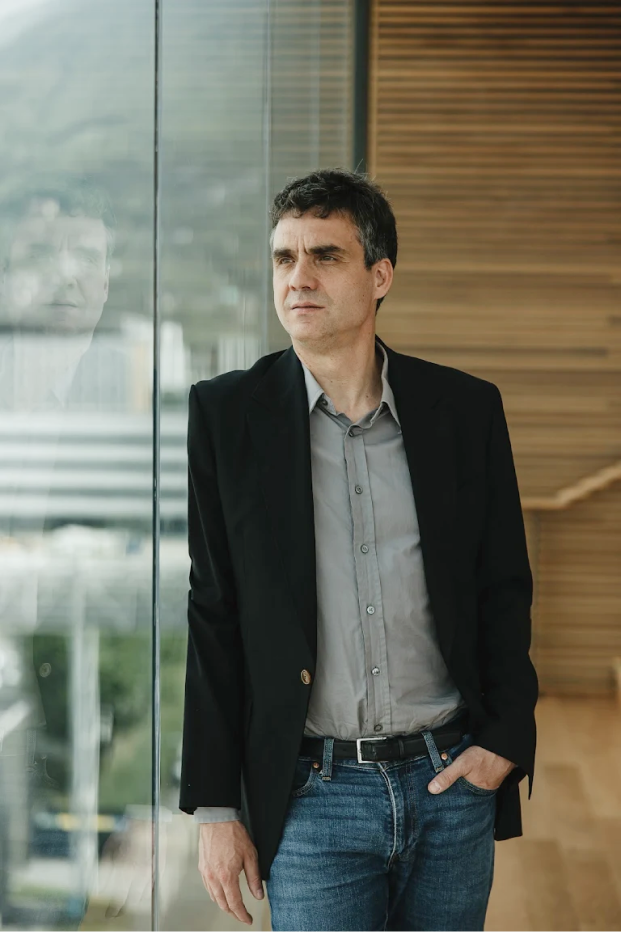
TRISTAN MEUNIER CNRS Institut Néel, University Grenoble Alpes, France Associated parallel session theme: Technology and Industry Talk title: FDSOI platform for quantum computing
|
An accomplished experimental physicist internationally-known for his groundbreaking research on the coherent transport and manipulation of spins in quantum dot arrays, Tristan did his PhD at the Laboratoire Kastler Brossel (LKB) of the École Normale Supérieure (ENS) in Paris under the tutelage of Nobel Laureate Serge Haroche followed by a postdoctoral fellowship at TU Delft—a pioneering center for experimental research on spin qubits. This postdoc shaped Tristan’s vision of science as a means of advancing humanity. Following a European Research Council (ERC) Starting Grant for his research on the coherent control of individual electron spins in semiconductor nanostructures and, later, a Synergy Grant with Maud Vinet and Silvano de Franceschi, Tristan led Grenoble’s quantum spin qubit community at the French National Center for Scientific Research (CNRS) before joining Quobly as CTO full-time. |
Add event to your calendar


Organizer
University of Oulu
firstname.lastname@oulu.fi